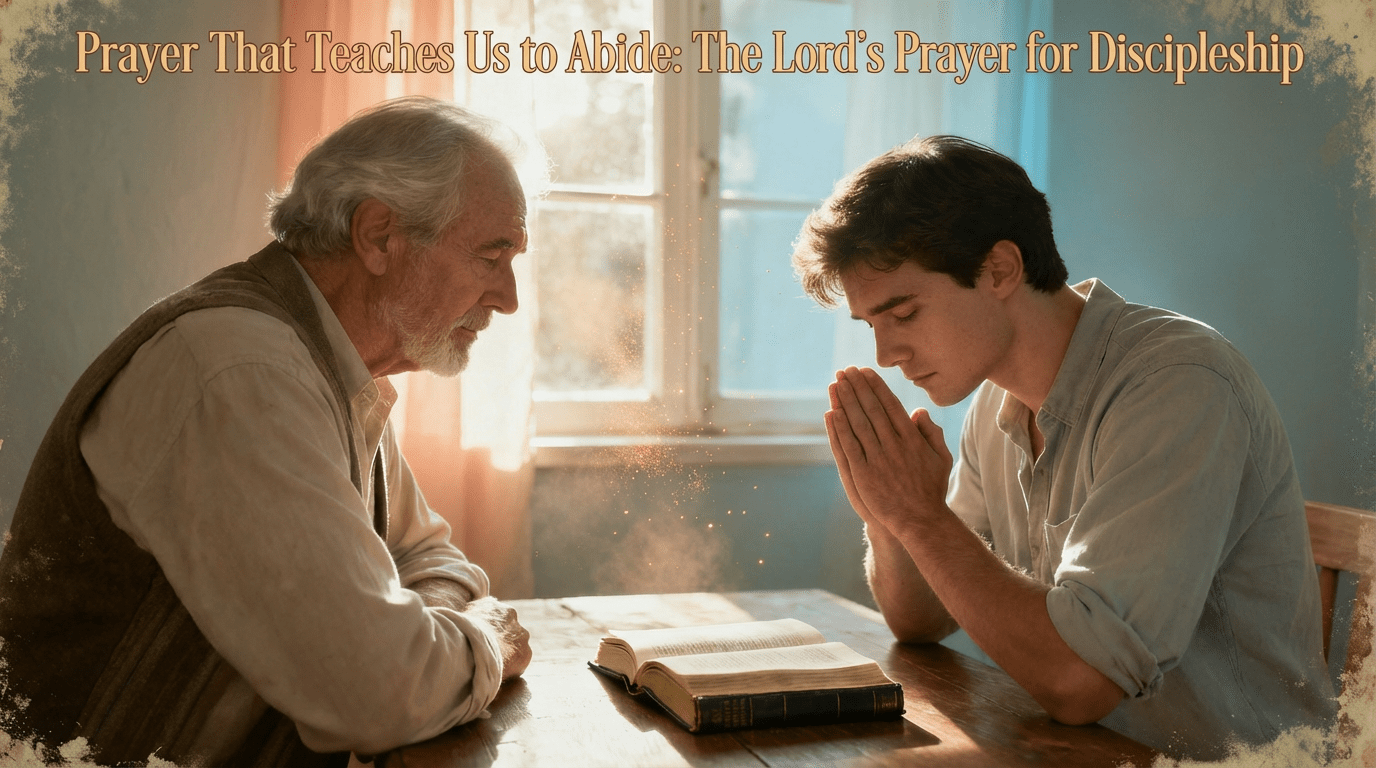
When Prayer Stops Being Polite and Starts Forming You
Most believers know the words of the lord’s prayer by heart. They can recite it without looking. The danger is not ignorance. The danger is familiarity. When Jesus gave this prayer, He did not hand His disciples a religious script. He gave them a structure for life with God. He gave them a pattern that would press them into obedience, humility, hunger, forgiveness, and endurance.
This is not casual prayer. This is formation.
When Christ says, “Our Father,” He pulls disciples out of isolation. Prayer for discipleship begins with belonging. Not “my Father.” Our Father. The Christian life cannot be lived alone. Private faith eventually shrinks. Shared dependence strengthens. If someone claims to follow Jesus but refuses to be part of the family of God, their prayer life will dry up, even if their words sound spiritual.
Then comes worship. “Hallowed be Your name.” Before needs. Before requests. Before plans. Discipleship begins with reverence. If God’s name is not holy in your heart, your decisions will drift. Abiding in Christ is not mystical fog. It is a daily alignment. It is learning to desire what honors Him.
Your Kingdom Come Is a Dangerous Request
When you pray, “Your kingdom come,” you are surrendering control. That is not poetic language. It is costly. Every serious prayer for discipleship includes surrender. God’s kingdom disrupts selfish ambition. It exposes hidden pride. It rearranges schedules. Many believers ask for a blessing while resisting authority. That tension will choke spiritual growth.
“Your will be done.” Those words confront comfort. They challenge convenience. They force honesty. Abiding is not passive. It is an active submission. The lord’s prayer teaches disciples to bend their lives toward God’s will before they attempt to bend God toward theirs.
Daily Bread and Daily Dependence
“Give us this day our daily bread.” Notice the rhythm. Daily. Not monthly. Not annually. God trains disciples through dependence. Prayer keeps pride from hardening. When believers stop asking, they start assuming. When they start assuming, they drift into self-reliance. Self-reliance slowly erodes intimacy with Christ.
This part of the prayer sounds simple, but it confronts anxiety. It confronts greed. It confronts fear about the future. Jesus ties discipleship to daily trust. Abiding in Christ is sustained by repeated surrender of worry. Not once. Again and again.
Forgiveness That Cuts Deep
“And forgive us our debts, as we forgive our debtors.” There is no abiding without repentance. None. The lord’s prayer refuses to separate vertical and horizontal relationships. If you want closeness to God while harboring bitterness, you will feel distant. Prayer for discipleship forces believers to examine their grudges.
Forgiveness is not weakness. It is obedience. It keeps the heart soft. A hardened heart cannot hear the Spirit clearly. Many spiritual struggles are not intellectual. They are relational. Unforgiveness blocks growth. Confession clears the way.
“Lead us not into temptation.” Disciples who pray this are admitting vulnerability. They are not pretending strength. They are asking for protection because they know their own weakness. That honesty keeps them abiding.
The lord’s Prayer is not a children’s recitation. It is a daily recalibration of the soul. Pray it slowly. Pause at each line. Let it confront ambition, fear, resentment, and pride. Let it train you.
Do not leave prayer as a ritual. Let it shape your schedule, your words, your spending, your responses at home and at work. If you want to grow in abiding, start here. Return here tomorrow.
For deeper growth, visit our free Life Skill Guides page and choose the biblical topics that speak to your current season.
Pay special attention to our field guide, Abiding in Christ. Take it slowly. Pray through it. Then live it.
The next time you say, “Our Father,” mean it.