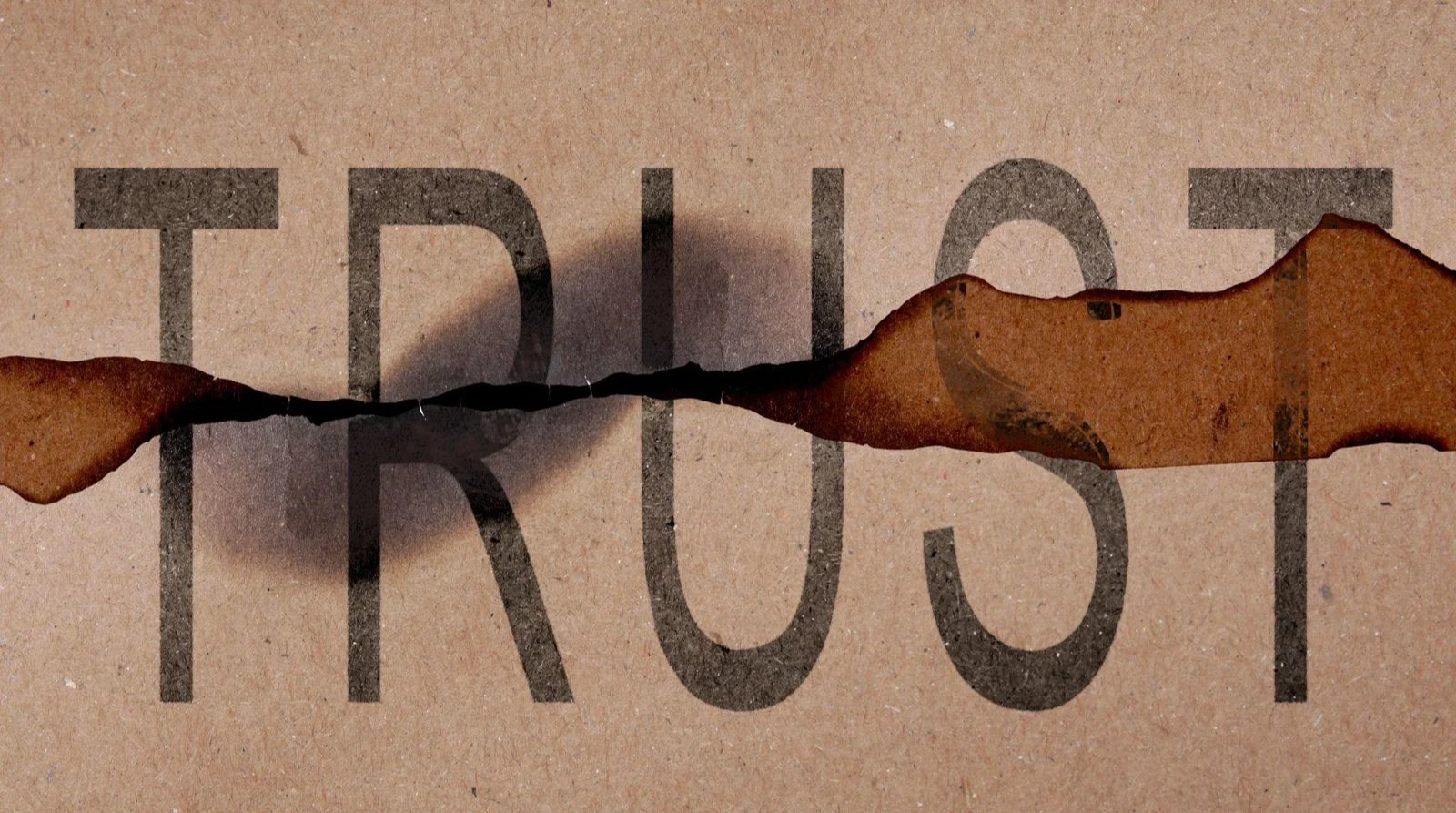
Nobody warns you how quiet betrayal is. There is no crash. Just a text message, a bank statement, a rumor you hear secondhand. A deacon finds the business account empty. A wife reads messages she was never meant to see. A young man hears his private confession repeated across the whole youth group. Different stories. Same look in the eyes.
Betrayal does not feel like ordinary pain. It feels like the floor moved.
If that is where you are, hear two things. You are not crazy for hurting this much. And you are not the first person God has carried through it.
Why Betrayal Hurts So Deeply: What the Bible Says About Broken Trust
A stranger can insult you, and you will forget it by Friday. A friend can do far less, and you will lose sleep for a year. Why?
Because trust is an open door. You only hand your house key to people you love, and a betrayal of trust means someone used that key to walk in and take something. The closer the person, the deeper the cut.
David knew it. Listen to Psalm 55: “For it is not an enemy who taunts me; then I could bear it… But it is you, a man, my equal, my companion, my familiar friend. We used to take sweet counsel together.” (Psalm 55:12-14)
He could bear an enemy. He could not bear a friend.
Scripture takes broken vows seriously because God takes covenant seriously. Malachi says the Lord Himself “was witness” between a husband and the wife of his youth (Malachi 2:14). When a promise made before God is broken, you feel abandoned by a person and, if you are honest, a little abandoned by heaven too.
That feeling is real. It is not the final word.
Bible Verses About Betrayal: Finding Comfort in God’s Promises
When my own trust was broken years ago, I did not need a sermon. I needed something to hold. These are the Bible verses about betrayal I still hand to people in my office.
When you feel crushed: “The Lord is near to the brokenhearted and saves the crushed in spirit.” (Psalm 34:18) Near. Not watching from a distance.
When someone close turned on you: “Even my close friend in whom I trusted, who ate my bread, has lifted his heel against me.” (Psalm 41:9) God put your exact pain in His Word. You are seen.
When family failed you: “For my father and my mother have forsaken me, but the Lord will take me in.” (Psalm 27:10)
When you wonder who is left: “I will never leave you nor forsake you.” (Hebrews 13:5)
When it looks like evil won: “As for you, you meant evil against me, but God meant it for good.” (Genesis 50:20) Joseph said that to his brothers, from a palace, to the brothers who sold him into slavery.
Read these out loud. Comfort rarely arrives as a feeling first. It usually comes as a promise you decide to lean on before your heart catches up.
How Jesus Responded to Betrayal and What We Can Learn From Him
Here is something that still stops me. Jesus knew.
He knew Judas would sell Him for thirty pieces of silver, and He washed Judas’s feet anyway (John 13). When Judas arrived in the garden with soldiers behind him, Jesus did not curse him. He called him “Friend” (Matthew 26:50).
That same night Peter, the loudest one in the room, swore three times that he never knew Him. Luke records one devastating detail: “And the Lord turned and looked at Peter.” (Luke 22:61) Not a lecture. A look.
What do we learn?
Jesus felt it. He was “troubled in his spirit” (John 13:21). Following Christ does not mean pretending you are fine.
Jesus did not retaliate. Peter later wrote that when Jesus suffered, “he did not threaten, but continued entrusting himself to him who judges justly” (1 Peter 2:23). That is not weakness. It takes enormous strength to refuse revenge.
Jesus left a door open. After the resurrection, He went looking for Peter on a beach, cooked him breakfast, and asked him three times, “Do you love me?” (John 21). Three denials. Three restorations.
You may never get a beach conversation with the one who hurt you. But you can carry the same heart.
Forgiveness After Betrayal: How to Heal, Rebuild Trust, and Move Forward With Faith
Let me clear up a lie that keeps Christians stuck. Forgiveness is not the same thing as trust.
Forgiveness is a debt you cancel. Trust is a bridge someone rebuilds. God commands the first (Ephesians 4:32). The second is earned slowly, plank by plank. You can forgive a person fully and still not give them your house key back yet.
Here is what I tell people who want to heal:
1. Tell God the whole truth. The Psalms are full of raw anger. Pray like David, not like a greeting card.
2. Let God hold the verdict. “Never avenge yourselves, but leave it to the wrath of God.” (Romans 12:19) When the replay starts in your head, say it out loud: “That case belongs to You, Lord.”
3. Forgive before you feel it. Forgiveness is a decision you may need to make a hundred times. That is normal.
4. Set wise boundaries. Forgiving someone does not mean giving them the same access tomorrow.
5. Do not heal alone. Find a pastor, a mentor, or a trusted believer and say the hard thing out loud.
You will not wake up healed next Tuesday. Some mornings the old ache will come back. That does not mean you failed to forgive.
One question is left, and only you can answer it. Will the person who hurt you write the rest of your story, or will God?
Pick one verse from this page today. Pray it before you sleep tonight. Then do it again tomorrow.
Go deeper: The Mentoring Project offers free Life Skill Guides on many biblical topics, each in audio and PDF formats, so you can read or listen wherever you are.
If this article met you in a hard place, start with Guide #68, Surviving Betrayal: Trusting God When People Fail You.
It takes these questions slower and deeper, and you can work through it alone or with a mentor.