Marcus had two job offers leaning against the fruit bowl on his kitchen table. One paid almost twenty thousand more a year. The other meant staying near their church, the same people who’d dropped off casseroles for a month straight when his wife was sick. He’d prayed about it for weeks. Still, there he was at 2 a.m., watching the ceiling fan go around, whispering, “Lord, could You please just tell me?”
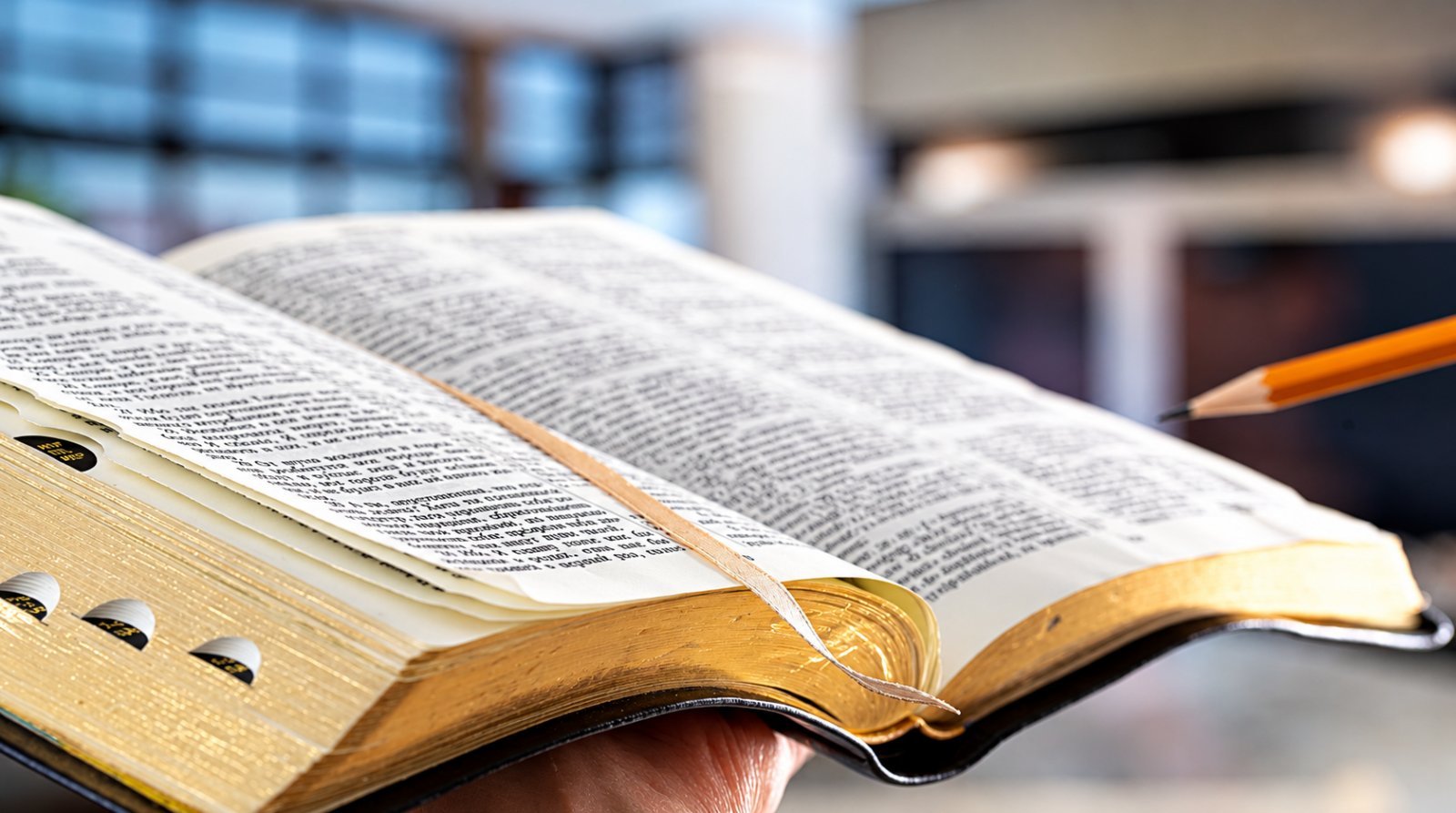
Maybe you’ve had your own version of that night. For you it might be a relationship, or a move, or whether to finally say yes when your pastor asks if you’d lead a small group. Heaven can feel awfully quiet at 2 a.m. But biblical decision making hardly ever begins with a booming voice from the clouds. Most of the time it begins with a dog-eared Bible and a heart that’s honestly willing to hear.
Why Bible Study Matters When We Face Important Choices
“What does God say about making decisions?” We hear that question from people who just walked into church for the first time and from pastors who’ve been preaching since the eighties. The truthful answer is that He says quite a lot. He just doesn’t usually send it as a personal text with a thumbs-up emoji.
Psalm 119:105 calls God’s Word “a lamp for my feet, a light on my path.” Picture one of those little clay oil lamps from Bible times. It didn’t light up the whole road ahead. It lit maybe the next three or four steps, enough to keep you from tripping over a rock in the dark.
That’s why Bible study and decision making really belong together. If Scripture only comes off the shelf when you’re panicking, it can feel like reading instructions in a language you never learned. When it’s woven into your ordinary week, though, it slowly reshapes the way you think. Then, when the big moment arrives, God’s voice sounds like someone you already know.
One of the older men in our mentoring groups once leaned across a diner table and told a jittery twenty-five-year-old, “Son, you don’t learn to swim while you’re drowning.” Nobody said anything for a second. He was right, and everyone knew it. The habits you build on a dull Tuesday morning are the ones that keep you afloat when Friday night gets scary.
How Scripture Shapes Wisdom, Discernment, and Priorities
Hebrews 4:12 says God’s Word judges “the thoughts and attitudes of the heart.” If we’re honest, that verse can make us squirm a little. Most of our worst decisions don’t come from missing information. They come from reasons we’d rather not say out loud.
Marcus finally said his out loud over pancakes with his mentor. Part of him wanted the bigger salary because his dad had never once told him he was proud of him. Scripture didn’t choose the job for him. What it did was shine a light on what was really pulling at his heart, and that changed everything about how he looked at the two offers.
So much of the decision making in the Bible looks less like a tidy formula and more like God patiently shaping people over time. Think about Jesus in Luke 6. Before He chose His twelve apostles, He spent the entire night praying on a mountainside. If Jesus pulled an all-nighter before a big choice, most of us can probably give up one evening of scrolling through our phones.
Scripture also has a quiet way of reshuffling our priorities. Micah 6:8 says God wants us “to act justly and to love mercy and to walk humbly with your God.” Hold your options up against that verse and see what happens. Some of them just can’t be done humbly, and they tend to lose their sparkle pretty quickly.
Biblical Principles That Help Us Choose What Is Right
If you read enough bible lessons on decision making, you’ll notice the same few truths showing up over and over. These are the four we keep coming back to in our own lives.
Start with what God has already made clear. Plenty of questions have plain answers already. You don’t need a week of prayer about whether to fudge your expense report. If an option breaks a clear command, cross it off the list and keep going.
Ask for wisdom, and then actually expect it. James 1:5 promises that God “gives generously to all without finding fault” when we ask. It’s not a trick or a test you might fail. God is not hiding the answer under a couch cushion.
Invite other people in. Proverbs 15:22 says, “Plans fail for lack of counsel, but with many advisers they succeed.” Even the early church made its hardest calls together. After a pretty tense argument in Acts 15, the leaders wrote that “it seemed good to the Holy Spirit and to us.” We’ve always loved that phrase. Your mentors and honest friends aren’t a backup option. They’re one of the everyday ways God steers His people.
Keep your hands open. Proverbs 16:9 says we plan our course, “but the LORD establishes their steps.” That’s where genuine acceptance of God’s will takes root. In Gethsemane, with sweat falling like drops of blood, Jesus prayed, “Yet not my will, but yours be done” (Luke 22:42). That kind of surrender isn’t giving up. It’s trusting that God can see around corners we can’t.
There’s one more piece people tend to forget. The power of decision making in the Bible is that your choices really do matter. Joshua stood in front of a whole nation and said, “Choose for yourselves this day whom you will serve” (Joshua 24:15). God doesn’t shuffle us around like pieces on a board game. He hands us the choice, and then He walks right next to us while we make it.
Turning Study Into Action: Making Decisions With Faith and Confidence
Knowing all this is honestly the easy part. Living it while your stomach is doing somersaults is another story.
Here’s a simple rhythm many of our mentors suggest. Write your decision on an index card in one plain, honest sentence. For the next seven days, read passages connected to it, and ask for God’s guidance in decision making before you pick up your phone each morning. Proverbs and James are wonderful places to start. Proverbs 3:5-6 deserves a sticky note on your bathroom mirror: “Trust in the LORD with all your heart and lean not on your own understanding.”
After that, call two mature believers who love you enough to tell you the truth. We don’t mean the friends who’ll cheer you on no matter what you pick. We mean the ones who’ll gently ask the question you’ve been dodging for weeks.
Keep an eye out for peace as well. Philippians 4:7 describes a peace that “transcends all understanding.” It never replaces obeying what Scripture plainly says. But once you’ve read, prayed and really listened, that quiet calm settling in your chest is often how God nudges you forward.
Marcus turned down the bigger paycheck. Money was tight that first year, and he’ll admit a couple of months were genuinely stressful. By the next spring, though, he was meeting two younger guys from church every Thursday at a diner, helping them work through their own hard choices. None of that could’ve happened three states away.
Scripture decision making won’t always make your choices easy. It will make them faithful. And sometimes the scripture on making the right decision has been sitting on your nightstand for months, half-buried under a phone charger and a stack of mail, just waiting for you to open it.
What decision is keeping you awake right now? Please don’t carry it alone. And don’t try to make it with your Bible still closed.
We’d especially encourage you to begin with Guide #18, God’s Plan: How to Discern His Will for Your Life.
Grab it this week, ask a friend or mentor to work through it with you, and take your next step with God’s Word wide open on the table.
If you’re wondering where to start, our free Life Skills Guides cover dozens of biblical topics, and every one is available as audio or a downloadable PDF.