
Matthew chapter five holds a verse pastors love to quote, and few of us actually practice. “Let your yes be yes, and your no be no,” Jesus said, teaching people not to swear oaths, not to hide behind clever language, and not to promise more than they intended to deliver. He was talking about integrity. He was also, whether we noticed it or not, teaching us the boundary meaning behind every honest relationship we will ever have. Every relationship you hold, every commitment you carry, and every ministry assignment you accept lives or dies on that same single principle.
A woman in my congregation once told me she had not said no to anyone in eleven years. Not to the deacon board. Not to her mother-in-law, who called every Sunday afternoon expecting a visit. Not to the young families who needed a babysitter on a moment’s notice, every single week, without fail. She wore her yeses like a badge of holiness, and underneath that badge she was falling apart.
What Jesus Actually Meant by Yes and No
Read the verse again slowly. Jesus was not commanding endless availability. He was commanding honesty. A yes that means yes. A no that means no. Nothing hidden underneath, no guilt wrapped around the words, no manipulation disguised as humility.
Boundary setting gets a bad reputation in Christian circles. Somewhere along the way we decided that saying no to a person meant saying no to God. That is not what Scripture teaches. Jesus withdrew from crowds. He said no to people who wanted him to stay in one town instead of preaching in another. He set limits on his time, his energy, and his availability, and he did it without apology.
The Boundary Meaning We Keep Missing
Here is what took me years in ministry to understand. Setting boundaries is not selfish. It is stewardship. God gave you a finite body, a finite calendar, a finite capacity for care. Pretending otherwise does not make you holy. It makes you tired, resentful, and eventually useless to the very people you were trying to serve.
A boundary is simply a clear yes or a clear no, spoken in love, without a script of excuses attached. You do not need to justify your no with four paragraphs of explanation. Jesus did not. He said no and moved on to the next town, the next need, the next assignment from the Father.
Practical boundary setting looks like this in daily life. Decide ahead of time what commitments align with what God has actually called you to this season. Say no to the rest, kindly and clearly, before resentment builds. Stop apologizing for limits that keep you sane enough to love people well tomorrow.
Saying No Without Burning the Bridge
The fear underneath most of our broken boundaries is relational. We think no will end the friendship. Usually it does the opposite. People trust a person whose yes actually means something. They stop trusting the friend who says yes to everything and delivers on almost nothing.
Speak your no with warmth. Offer an alternative when you can. Hold the line when you cannot. A bridge burns when a no arrives wrapped in bitterness or silence, not when it arrives wrapped in honesty.
Try this next week. Pick one request you would normally accept out of guilt. Say no, clearly, kindly, and without three excuses trailing behind it. Watch what happens to your peace, and watch what happens to the relationship. Both will likely surprise you.
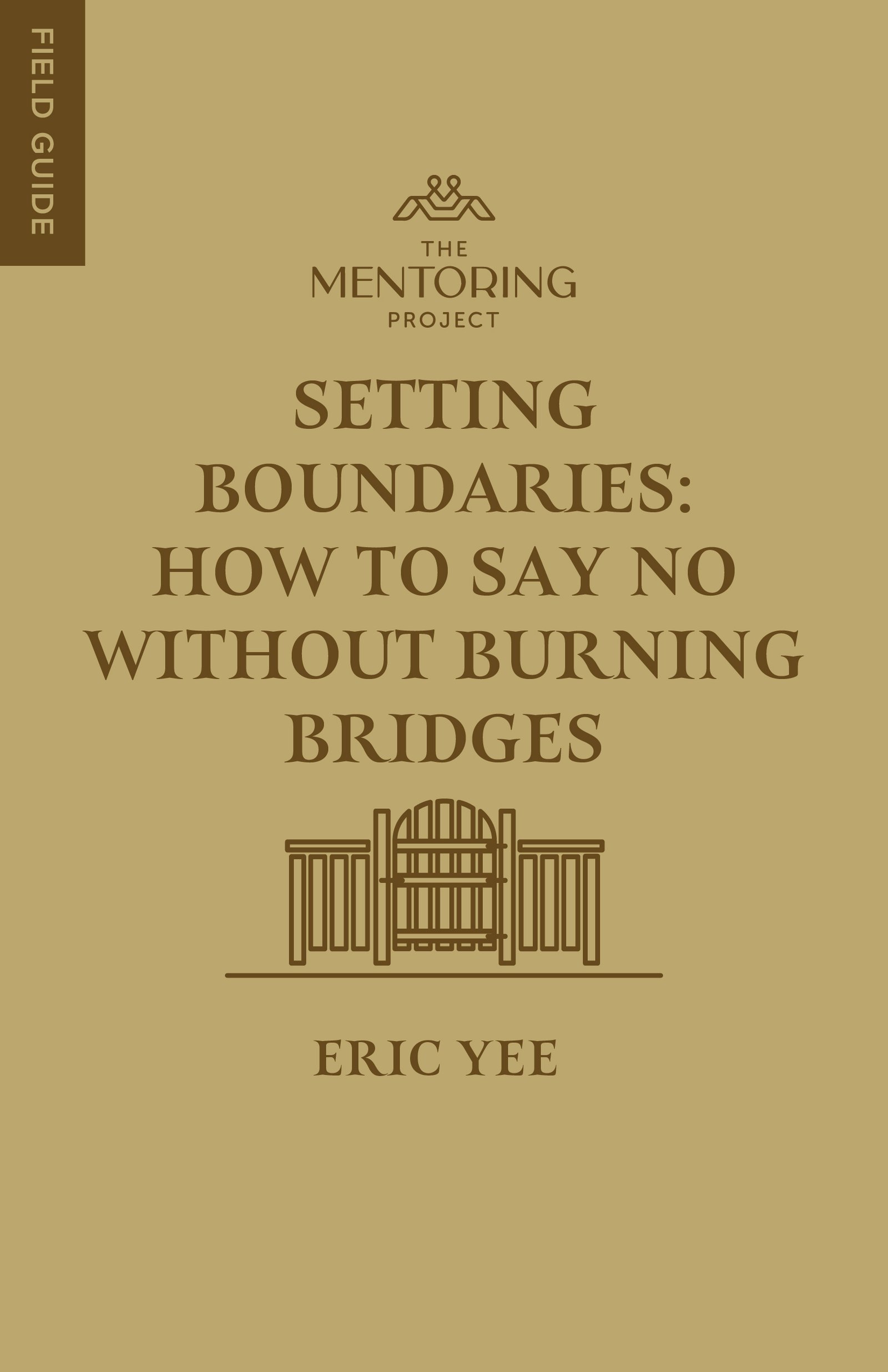
Start with the guide built exactly for this moment: Setting Boundaries: How to Say No Without Burning Bridges.
Read it this week. Your relationships are worth the honesty.
If this stirred something in you, we have a full library waiting. Visit our free Life Skill Guides page at The Mentoring Project, where over a hundred guides sit ready in audio and PDF, covering everything from grief to money to prayer.